
Tax implications for non-residents selling property in Mexico
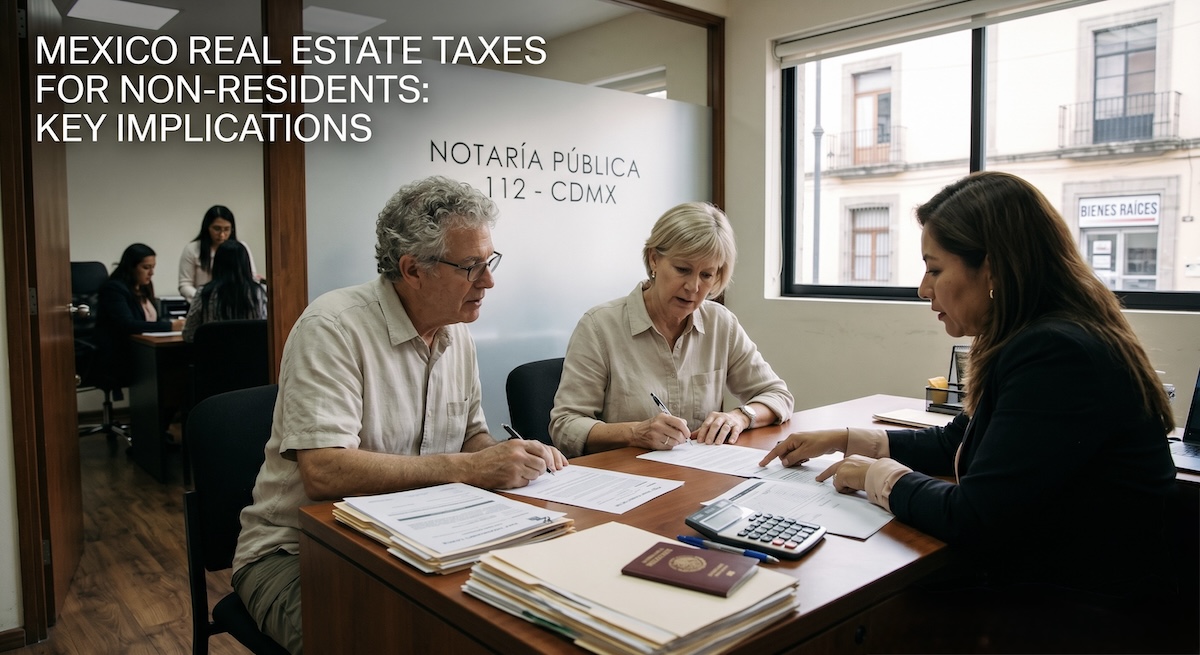
Non-residents selling property in Mexico are generally subject to Mexican capital gains tax, and the exact tax treatment depends on residency status, documentation, and the sale structure. In many cases, the notary handles withholding and filing at closing, so the tax outcome should be planned before signing the deed.
Main tax rules
For non-residents, a common default treatment is a 25% tax on the gross sale price if the seller does not qualify for deductions or does not have the required tax registration. If the seller has an RFC and supports deductions properly, the gain may instead be taxed on a net basis, with allowable costs such as acquisition expenses, notary fees, commissions, and documented improvements. Mexico also recognizes that the source of income from selling real property located in Mexico is in Mexican territory, so foreign residency does not remove the Mexican tax obligation.
Exemptions and documentation
Some exemptions may apply, but they are usually easier to access for Mexican tax residents than for non-residents. A primary-residence exemption can exist if the legal and documentary conditions are met, including proof of residence, tax identification, and supporting records. The practical issue is documentation: without invoices, official receipts, and proper tax IDs, the seller may lose the right to deductions and face a much higher effective tax burden.
Closing process
In Mexico, the notary public plays a central role in the sale and usually verifies the tax calculation before the transaction is completed. If the property is held through a fideicomiso, the foreign beneficiary is still the one treated as the seller for tax purposes. Because the tax can be withheld at closing, sellers should review the structure early to avoid surprises in the final amount received.
Practical advice
A non-resident seller should confirm whether they need an RFC, gather invoices for all eligible deductions, and request a tax estimate before listing the property. They should also check whether a tax treaty with their home country may help prevent double taxation, since Mexico does have treaties with some countries. The safest approach is to coordinate early with a Mexican notary and a cross-border tax adviser, because a small documentation gap can materially change the tax bill.